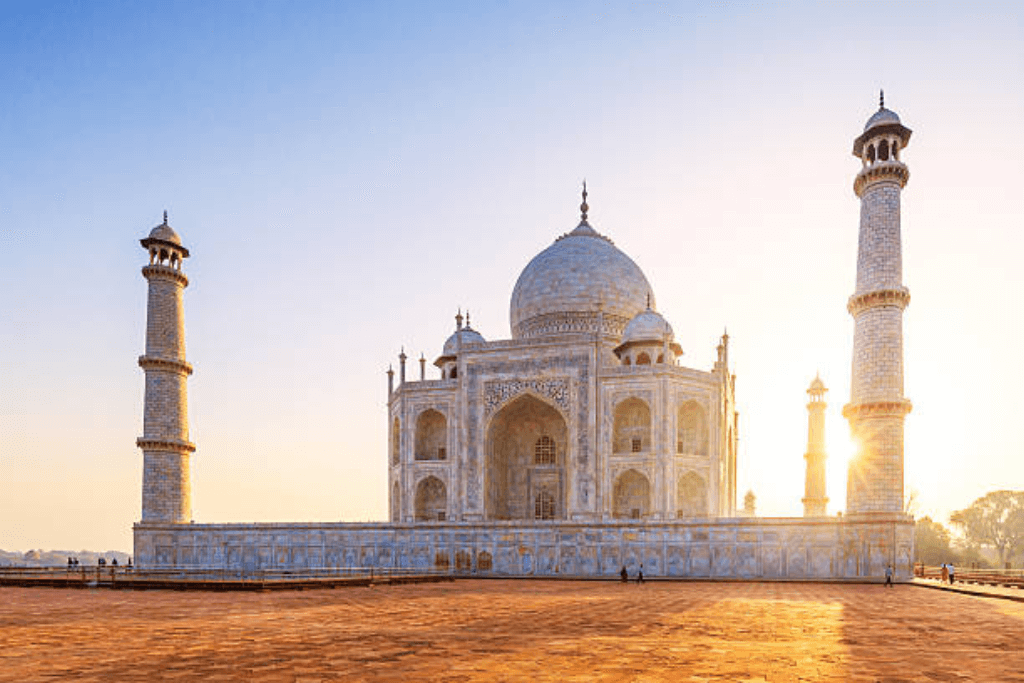
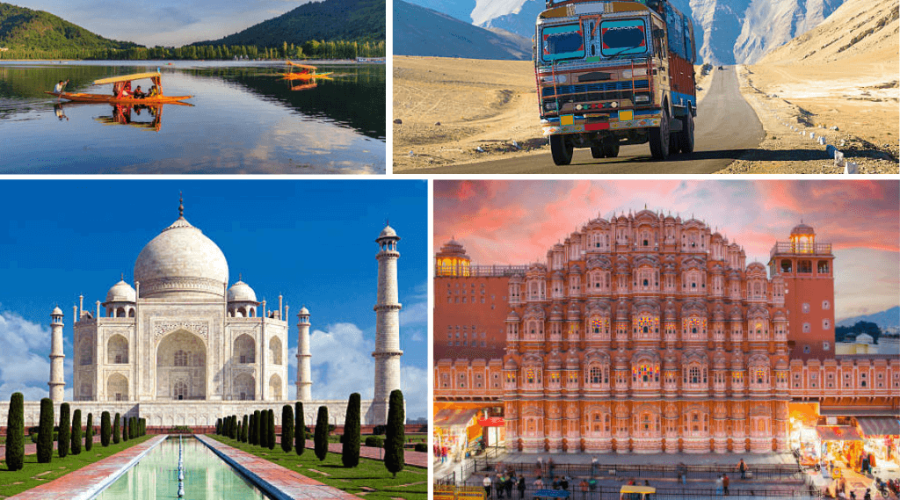
The Taj Mahal is one of the most iconic monuments in India.It was built by the Mughal emperor Shah Jahan in memory of his beloved wife Mumtaz Mahal.When Mumtaz passed away in 1631,Shah Jahan was heartbroken and decided to create a grand memorial that would stand as a symbol of their love.
Construction began in 1632 and took around 22 years to complete.Nearly twenty thousand workers,craftsmen,artists,and engineers took part in building it.The monument is made mainly of white marble brought from Rajasthan.The delicate carvings,stone inlay work,and calligraphy on the walls reflect the finest Mughal architecture of that time.
Shah Jahan wanted the place to represent eternal love.The Taj Mahal is not just a tomb,it's a complete complex with gardens,a mosque,a gateway,and a long reflecting pool .The marble changes color with the sunlight,which adds to its charm throughout the day.
Today,the Taj Mahal is a UNESCO World Heritage Site and one of the Seven Wonders of the World.It stands as a blend of history,emotion,and artistry,and continues to attract millions of visitors from around the globe.
Grab the bag that carries it all with style and comfort.
Taj Mahal on Map
The design of the Taj Mahal
The design of the Taj Mahal is considered a masterpiece of Mughal architecture ,and the specialists behind it were a mix of architects,artisans,and planners from India,Persia,and Central Asia.
Ustad Ahmad Lahauri is widely recognized as the chief architect of the Taj Mahal.He oversaw the entire design and construction process.
Persian and Mughal architects contributed to the layout,symmetry,gardens,and calligraphy.
Artisans and craftsmen from India,Persia,and the Ottoman Empire created the intricate marble inlay work,floral designs,and detailed carvings.
Structural engineers ensured the stability of the mausoleum,including its large dome,minarets,and the reflecting pools in the garden.
The Taj Mahal’s design combines I slamic,Persian,Ottoman,and Indian architectural styles.Its perfect symmetry,geometric patterns,and ornamental marble inlay work are what make it a global architectural icon.
Best Time to Visit Taj Mahal
The ideal time to visit the Taj Mahal is from October to March .The weather stays cool and pleasant during these months,which makes walking around the complex more comfortable.Winter mornings often create a soft golden light that looks beautiful on the white marble.
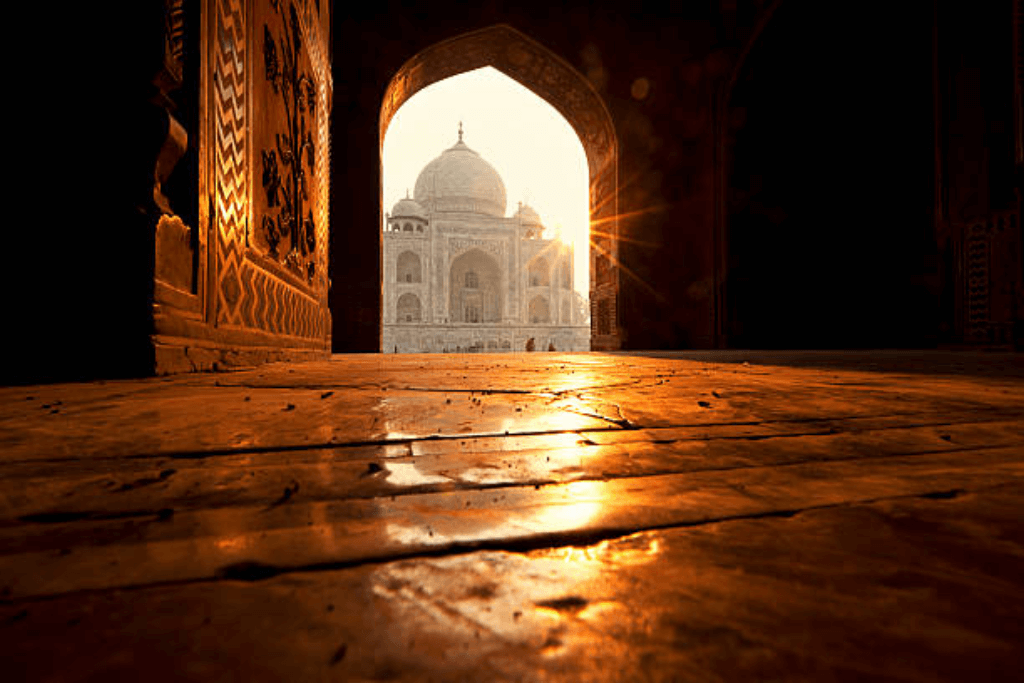
You can visit any time of the day,but sunrise is the most special.The monument glows gently in the early light and the crowds are smaller.Sunset is also a great time because the marble reflects warm colors as the sun goes down.
Travelers shouldn’t visit the Taj Mahal in the monsoon because the weather is humid,it rains often,and the sky stays cloudy.Heavy rain can make walking uncomfortable and the views of the monument are not as clear or bright for photos.
How to Get Around in Taj Mahal?
1.Fly to India
Book a flight to Delhi (Indira Gandhi International Airport). This is the most convenient airport for reaching Agra.
2.Travel from Delhi to Agra
You can reach Agra by
Train: Delhi to Agra by train takes about 2 hours. Fast trains like Gatimaan and Shatabdi depart from New Delhi or Hazrat Nizamuddin and arrive at Agra Cantt. From there, taxis or autos take you to the Taj Mahal.
Private car or taxi:Traveling from Delhi to Agra by private car or taxi is comfortable and flexible. The journey takes around 3–4 hours via the Yamuna Expressway.
AC bus: Traveling from Delhi to Agra by AC bus is affordable and convenient. The journey usually takes **4–5 hours**, and buses depart from major terminals like ISBT Anand Vihar. AC buses are comfortable, air-conditioned, and drop you close to Agra city or the Taj Mahal area.
3.Use the Eco-zone Transport
Regular vehicles are not allowed near the monument. Take a shuttle,an electric rickshaw,or walk to the entrance.
Sunrise at the Taj Mahal: Activities and Importance
Watching the sunrise at the Taj Mahal is a magical experience .Early in the morning,travelers usually enter through the East Gate, walk along the reflecting pool,and enjoy the calm gardens before the crowds arrive.This is the perfect time for photography,capturing the soft golden light on the white marble.Many also take a guided tour at this hour to learn the history while experiencing the monument in peace.
This moment is important for travelers because:
The Taj Mahal glows beautifully in the first sunlight,creating a serene and unforgettable view.
Crowds are minimal,so visitors can explore and take photos comfortably.
It allows travelers to experience the monument quietly,feeling its emotional and historical significance deeply.
Combination of Yamuna River and Taj Mahal
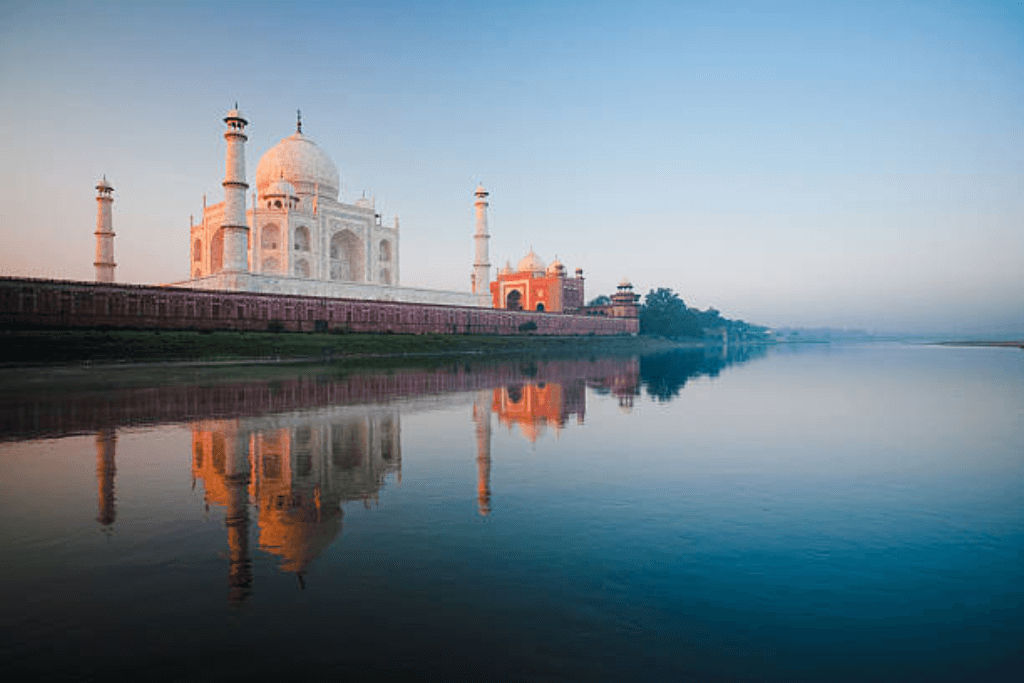
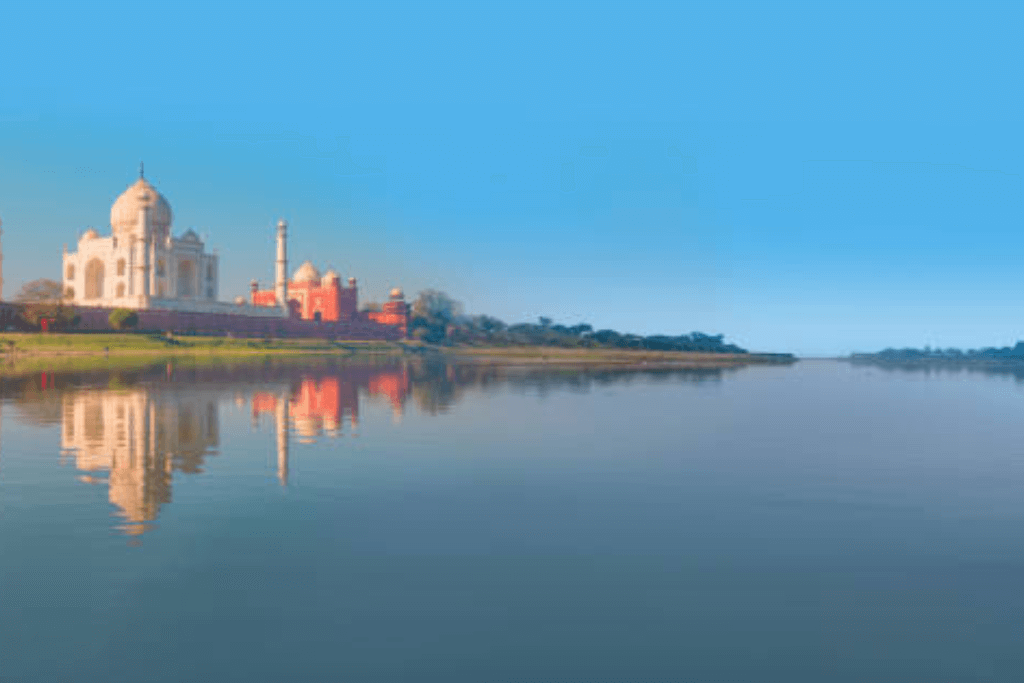
The combination of the Yamuna River and the Taj Mahal creates one of the most iconic and picturesque views in the world.The Taj Mahal is built on the river’s right bank ,and the flowing water enhances its serene and majestic aura.
The reflecting pools in front of the monument mirror the white marble,and the river adds a natural backdrop.
During sunrise and sunset,the soft light on the Taj Mahal reflects in the Yamuna,creating stunning photo opportunities.
Historically,the river was used to transport marble and construction materials,linking the monument to the natural landscape
This combination makes visiting the Taj Mahal not just a historical experience ,but also a visual and emotional one,blending architecture with nature beautifully.
We're Tahmin & Faijullah Bangladeshi bros with deep love of travel and adventure.